
%202.png?width=323&height=215&name=PH_VA_VR_Series_Technical_Support%20(1)%202.png)

Automation without conveyance is incomplete.
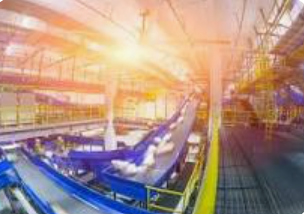
Conveyance systems are the backbone of automated production — keeping products moving, reducing bottlenecks, improving safety, and enabling scalable growth.
When people talk about automation, the conversation usually jumps straight to robots, software, vision systems, or AI. But there’s a quieter hero in almost every successful automated environment: conveyance.
Conveyance is more than “moving stuff from A to B.” It’s the connective tissue that links processes, synchronizes machines, stabilizes flow, and turns disconnected work cells into a true system. If your automation strategy is meant to scale, adapt, and integrate across operations, conveyance isn’t a side detail—it’s the framework your integration depends on.
Below is a practical, integration-focused look at why conveyance matters, what to consider when implementing it, and how the right conveyance capabilities can transform your automation approach.
___________________________________________________________________________
Conveyance: The Difference Between
“Automated Cells” and “Automated Systems”
A common pitfall in automation is building islands: a packaging robot here, a vision station there, a labeler somewhere else—each individually “automated,” but collectively fragile. Conveyance is what turns those islands into an ecosystem.
A well-designed conveyance layer enables you to:
-
-
Control flow (pace, sequencing, buffering, accumulation)
-
Coordinate timing between machines & stations
-
Reduce variability in part presentation & orientation
-
Increase uptime by preventing bottlenecks & starvation
-
Create modular integration points for future expansion
-
In other words: conveyance is a physical connection platform. Without it, your software integration is doing too much heavy lifting.
The Key Factors to Consider When Implementing Conveyance in an Automation Strategy
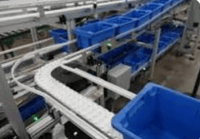 1. Throughput & Takt Time (Don’t Guess — Engineer It!)
Start with your required throughput and work backward:
-
-
- What’s the required parts-per-minute?
- What’s the cycle time of each station?
- Where do you need buffering to absorb variability?
-
Conveyance design is often where throughput wins or dies. If the belt speed, spacing, and accumulation zones don’t match real process timing, you’ll end up with constant “micro-stops” that look like equipment problems but are really flow design problems.
Takeaway: Conveyance should be designed as a system clock—a controlled cadence that everything else can synchronize to.
2. Product Characteristics: The Physical Reality Check
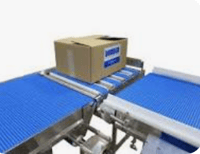 Conveyance choices depend heavily on what you’re moving:
-
-
- Size, weight, & center of gravity
- Surface finish & fragility
- Orientation requirements (flat, upright, indexed)
- Temperature, contamination, static sensitivity
- Variability in dimensions (tight tolerance vs. “messy” parts)
-
If your product is unstable on a belt, no amount of PLC logic will fix it long-term. The best automation strategies treat product handling as a first-class engineering problem.
Takeaway: Stable presentation means simpler sensing, fewer reject scenarios, and more reliable downstream automation.
3. Layout & Space Constraints: Flow Over Floorplan
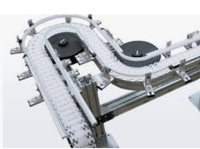
It’s tempting to squeeze conveyance into whatever space is left. Instead, design for:
-
-
- Straight runs where precision matters (inspection, pick-and-place)
- Service access (maintenance clearance, safe walkways)
- Clean routing of cables/air lines
- Logical expansion points for future stations
-
Takeaway: A layout that anticipates future integration reduces “rip-and-replace” costs later.
4. Control Architecture: How Smart Does the Conveyor Need to Be?
Not every conveyor needs to be “smart,” but your strategy should decide where intelligence lives:
-
-
- Mechanically simple + smarter controls (more sensors, more PLC logic)
- Mechanically engineered behavior (guides, escapements, indexing) that reduces control complexity
-
Modern conveyance can support:
-
-
- Zoning & accumulation logic
- Indexing & precise positioning
- Servo-driven timing & spacing control
- Handshakes with machines (ready/busy/fault states)
-
Takeaway: A conveyor isn’t just a motor—it’s an integration endpoint. Define the handshake signals, fault handling, and recovery logic early.
5) Sensors & Traceability: The Integration Superpower
If your automation roadmap includes traceability, quality analytics, or adaptive routing, conveyance becomes your data backbone:
-
-
- Photoeyes for presence & spacing
- Encoders for position tracking
- RFID/barcode for identity
- Vision triggers for inspection at consistent positions
- Weight checks, metal detection, reject gates
-
Takeaway: The more consistent the conveyance, the more reliable your data—and the more valuable your integration layer becomes.
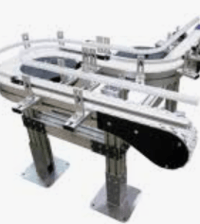
6) Flexibility & Changeover: Designing for Real Operations
Many automation projects fail not because they can’t run, but because they can’t change:
-
-
-
-
-
-
-
-
-
-
-
-
-
- New SKU sizes
- Different packaging
- Seasonal volumes
- Process updates
-
-
-
-
-
-
-
-
-
-
-
-
Conveyance flexibility can come from:
-
-
- Adjustable guides & rails
- Modular sections that can be swapped
- Quick-change tooling for diverters/stops
- Parameterized control recipes in the PLC/HMI
-
Takeaway: Design conveyance as a modular platform so your system can evolve without re-engineering everything around it.
7) Reliability, Maintainability, & Supportability
In automated environments, a conveyor failure is a system failure. Key considerations:
-
-
- Ease of belt replacement & tensioning
- Accessibility of motors, gearboxes, & sensors
- Spare parts strategy
- Operator-safe clearing of jams
- Error-proofing to prevent misfeeds
-
Takeaway: Your overall OEE is often limited by the most “boring” component. Conveyance reliability is leverage.
___________________________________________________________________________
How Conveyance Capabilities Transform Your
Approach to Manufacturing Operations
Once you treat conveyance as a strategic platform—not a utility—your operational approach changes in powerful ways:
A) You Move from Point to Flow
Instead of connecting machine A to machine B, you build a flow layer that:
-
-
-
Buffers between stations
-
Balances mismatched cycle times
-
Enables rerouting & rework loops
-
Minimizes line-stopping faults
-
-
B) You Unlock True Modularity
A modular conveyor line lets you:
-
-
-
Add stations without redoing the entire system
-
Pilot new processes in parallel
-
Scale capacity incrementally
-
-
C) You Enable Higher-Level Automation Intelligence
With strong conveyance and sensing, software can do more:
-
-
-
Dynamic routing based on inspection outcomes
-
Adaptive pacing based on downstream congestion
-
Real-time production analytics tied to physical movement
-
-
D) You Standardize Integration Patterns
Conveyance provides repeatable “plug-in points”:
-
-
-
Standard electrical and communication interfaces
-
Standard handshakes and fault states
-
Consistent physical presentation rules
-
-
That standardization reduces time dramatically across future projects.
A Note on Real-World Conveyor Solutions
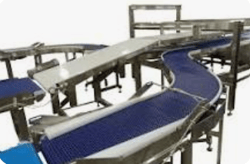
Choosing the right conveyance partner matters because the mechanical and control details determine how easy integration will be over the long run.
Manufacturers like Dorner Manufacturing Conveyors are frequently referenced in automation environments where modularity, reliability, and clean integration are priorities—especially when you’re designing conveyor systems as part of a broader automation platform rather than a one-off piece of equipment.
Spotlight on Dorner Manufacturing: Precision & Flexibility in Motion
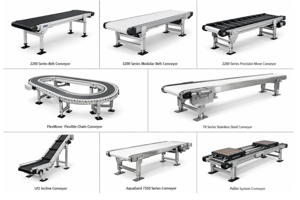
When building your automation toolkit, Dorner Manufacturing stands out as a trusted conveyor partner for integrators across food processing, pharmaceutical, packaging, industrial, and precision manufacturing industries.
So, why Dorner? OPTIONS, OPTIONS, OPTIONS!
🔹 Modular, Precision Conveyor Platforms
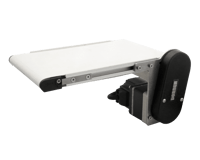
Dorner’s 2200 Low Profile, 3200 Heavy Duty, and AquaPruf Series platforms provide configurable solutions for tight spaces and complex layouts — ideal for integrating with robotics and vision systems.
🔹 Sanitary Conveyor Expertise
Dorner’s AquaPruf® and sanitary conveyor lines are designed to meet USDA and FDA standards, making them ideal for food, beverage, and pharmaceutical environments where washdown and contamination control are critical.
🔹 Automation-Ready Integration
Engineered for seamless integration with cobots, robotic pick-and-place systems, and automated packaging equipment.
🔹 Quick Change & Flexibility
Modular designs allow rapid reconfiguration for seasonal demand, SKU changes, and evolving production requirements.
🔹 Precision Product Handling
From small medical components to packaged goods, Dorner conveyors deliver accurate indexing, gentle handling, and consistent belt tracking.
For system integrators balancing compliance, footprint constraints, and ROI, Dorner Manufacturing provides a scalable foundation that supports long-term automation growth.
Conveyance Is Strategy, Not Accessories
If automation is about replacing manual effort, then conveyance is about orchestrating the system. It’s where flow is shaped, reliability is earned, and integration becomes scalable.
When you invest in conveyance deliberately—throughput planning, product handling, modularity, controls, and sensing—you don’t just move parts. You build a foundation for smarter integration, faster iteration, and a more resilient operation.
And in a world where automation is increasingly judged by adaptability, that foundation is everything.
Conveyance isn’t optional. It powers seamless automation.
It’s core infrastructure. ___________________________________________________________________
READY TO AUTOMATE WITH CONFIDENCE?
We are happy to HELP!
Whether you’re exploring your first robotic application, adding a component to your existing system, or upgrading a line with a new automation strategy, The Knotts Company can help you identify the right solution and products for your operation.
👉 Talk with a Knotts Automation Specialist
Let's discuss automation solutions tailored to
YOUR manufacturing goals.
Our customized solutions highlight innovative technologies designed to help manufacturers improve performance and stay competitive.
From advanced automation and robotics to motion control and pneumatic systems, we deliver proven solutions that increase efficiency, enhance productivity, and support long-term growth.
Backed by deep industry expertise and personalized service, our team partners with you to implement the right solution for your unique application.
📩Automate@KnottsCo.com 📞#(908) 464-4800